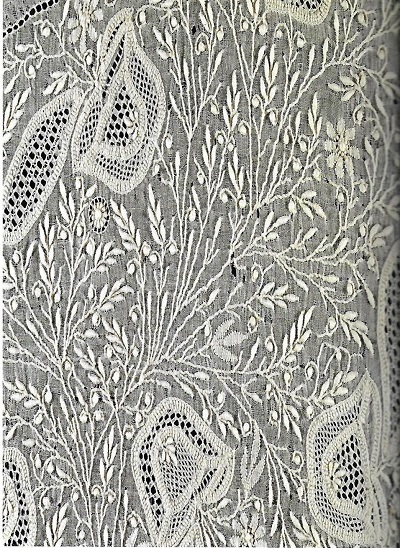
Designing Handloom Fabrics
SHRADDHA-a non-profit organisationBasics of Designing Handloom Fabrics
“Apa Ruchi Khana, Par Ruchi Pahanna” which means
“One should eat (food) as per one’s own choice, but should wear (fabrics) as per other’s choice”
This leads to the mindset and expectation of each individual to wear fabrics, which is unique and different from others.
Handloom weavers of India have exceptional talent and skill to weave fabrics at ease, each piece of which is different from the other.
This feature of handloom makes it unique.
It gives the owner pride and tremendous satisfaction.
This is the major strength of handloom fabric
Designing of Handloom Fabric – Conceptualization
Designing of handloom fabric involves two broad stages
1. Conceptualizations
2. Processing
Weaving of a fabrics on handloom starts with the weaver conceptualizing the design
As the weavers live in rural area, inspiration for designing is drawn from the nature.
The plants and animals in his surroundings provide the motivation and idea to the weavers for designing the product.
The motifs are carefully selected and are used for designing the fabrics and its different parts like body, border and paalu of a saree the typical women wear.
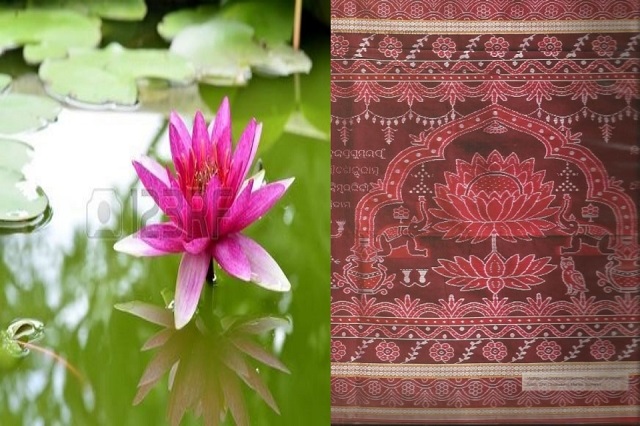
Inspiration for designing drawn from the plants, example Lotus, hibiscus, rudrakh, creepers
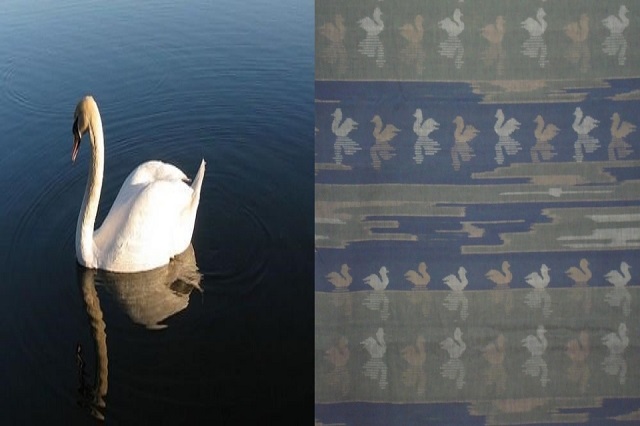
Inspiration for designing drawn from the animals, example Swan, Elephant, Fish
Designing of handloom fabric
Process :
Designing of handloom fabric is a complex process. Er the warp and weft.
Designing is usually done by addition of color of different shades
It is also with addition of thread or fiber
- This is done in three stages
(i) Processing the yarn before weaving.
(ii) During weaving with addition of yarn / other material.
(iii) After weaving
The overall process is known as Hand crafting, which cover all that is done by hand including handloom (restricted to the loom stage)
- Designing done outside the loom (after weaving) is called handcrafting by
(i) Painting
(ii) Embroidering
(iii) Printing on fabrics using wooden blocks
Designing handloom fabric
at weaving stage
1. The simplest fabrics design woven on handloom is Khadi
- Woven with handspun grey yarn (without any dyeing ) on the warp and the weft.
1. Striped design comes next
- Woven by using colored/ grey yarn along the warp or weft
1. Designing with addition of yarn on to the warp and/ or weft comes next
- Known as “Extra warp” or “Extra weft”
4. Dyeing with color provides the next option for designing
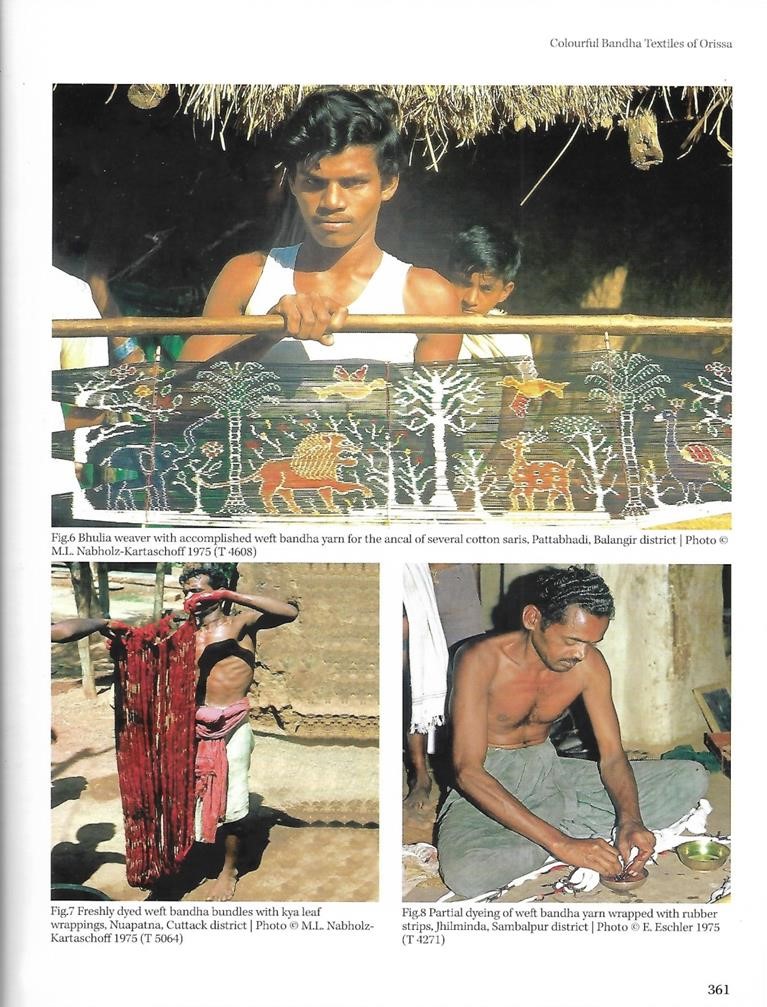
- “Resist dyeing” or Ikat of Bandh is one of the techniques used before weaving
- After weaving has various options like block printing
5. Usually more that one of these techniques are adopted by the weavers as per the requirements of weaving a particular designed fabrics
Designing handloom fabric
with dyeing at pre-weaving stage
In this method,
Yarn is dyed before weaving
The most techniques is “Resist dyeing”, commonly known as Tie & dye, Bandh or Ikkat
The desired pattern design is made on to the graph
Yarn is processed and tied by highly skilled weavers as per the graph
The tied yarn is dyed in a light colour to start with It is then washed, and the tied parts are opened .
This process is repeated 2 to 3 times to get the desired pattern .
After completion of the process the dyed yarn is taken on to the frame, checked and then taken on the loom for weaving
Tie and dye process is done either only with the warp or on the weft or on both
Accordingly, the fabrics design is warp ikkat, or weft ikkat of double ikkat
History of ikkat Technique of Designing
(DAYS OF EMPEROR BABUR)
Sounds strange but interesting. Fargana valley in Uzbekistan is the birth place of Babur. The valley is fertile and is known for cotton and silk apart from varieties of fruits natural to Central Asia. Babur was the son of the Emir of Fargana. But despite his strong army and dedication he couldn’t make his dream real to rule over Samarkand the most wealthy and historic place in Central Asia. So he eyed for Kabul and then Hindustan. That’s history.
Fargana had been known for ikat weaving ( called abrbandi, there one can see the similarity between bandhni and bandi) has been practiced since the 4 th century. They weave with cotton silk silk- cotton and even with velvet and wool thread though in a limited way. Above are photographs of two samples that I got from Bukhara just two days back. We couldn’t visit Fargana. But well stocked and sophisticated ikat fabric and garment show rooms are there in all tourist places like Taskent Samarkand and Bukhara
Though ikat weaving in Central Asia is centuries old it was rediscovered only in the 19 th century.It has become their national dress. People from all walks of life adorn themselves with ikat tops or gowns.
Ikat ( an Indonasian word) standing for resist dying of threads before weaving is age old in Odisha.A piece of ikat cloth of Odisha origin is believed to be found in the tomb a Pharaho Egyptian king. But how have we been able to. popularise this wonderful fabric in Odisha and abroad.
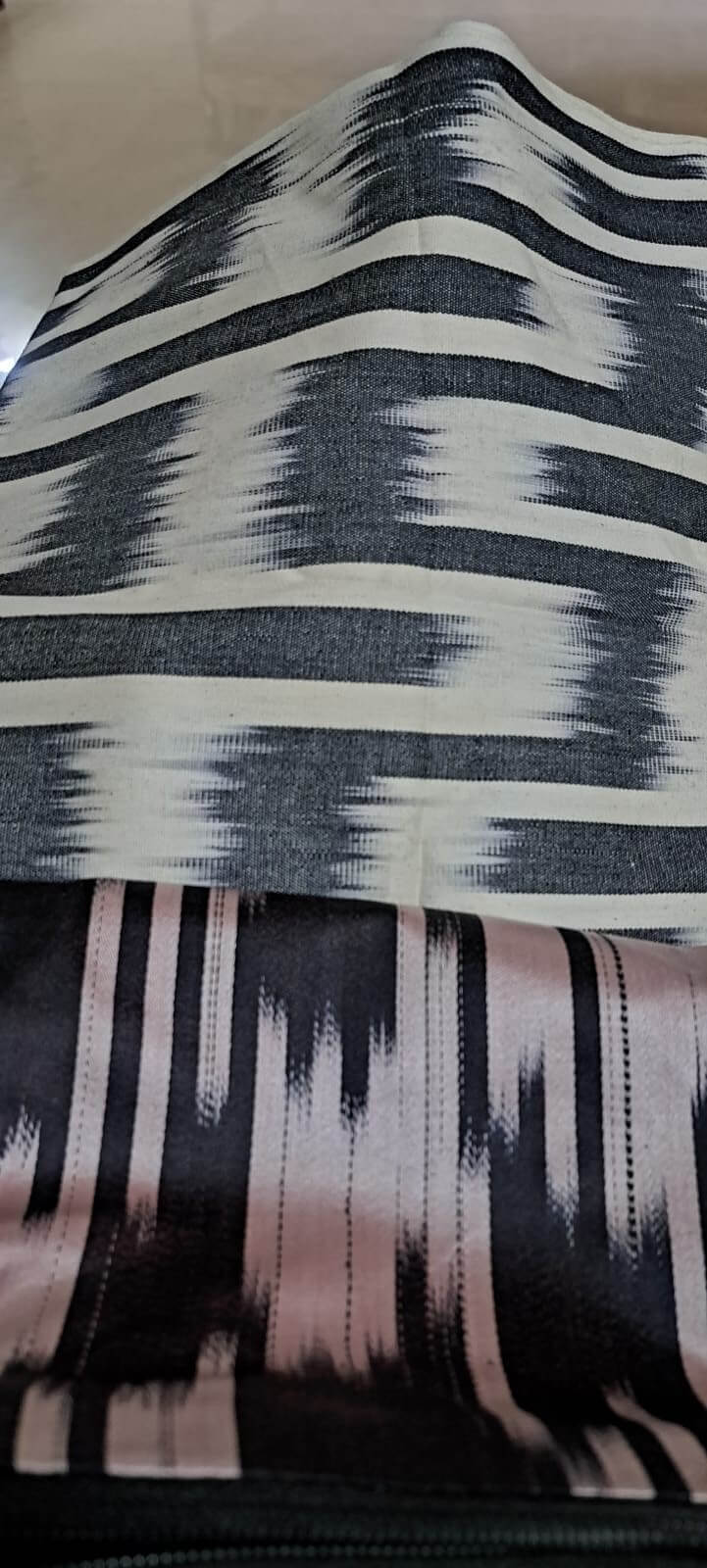
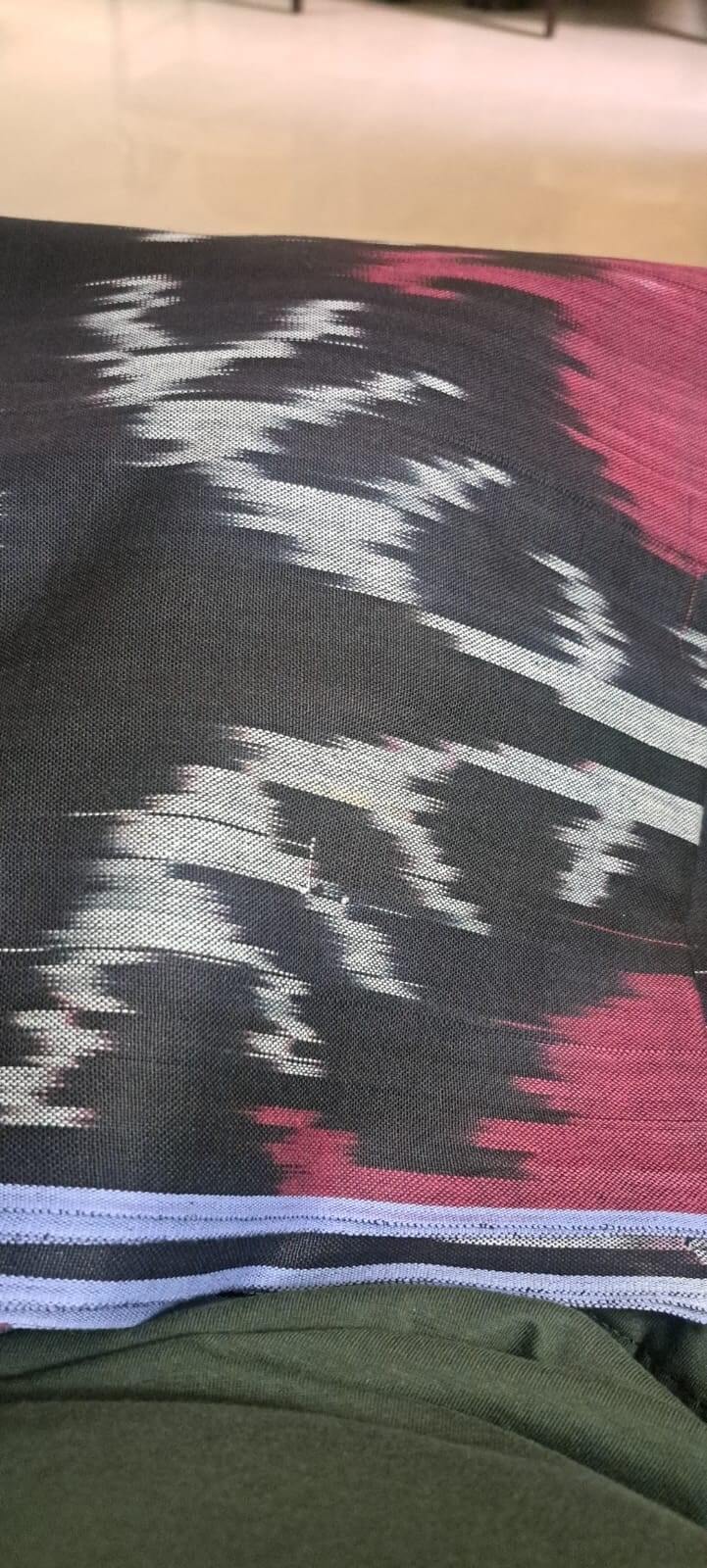
Dyed Textiles
- Before Weaving, or
- Resist dyed, Tie & Dye , Bandh, or Ikat
- Single ikat – on warp or weft
- Double ikat – both on warp and weft
- After Weaving
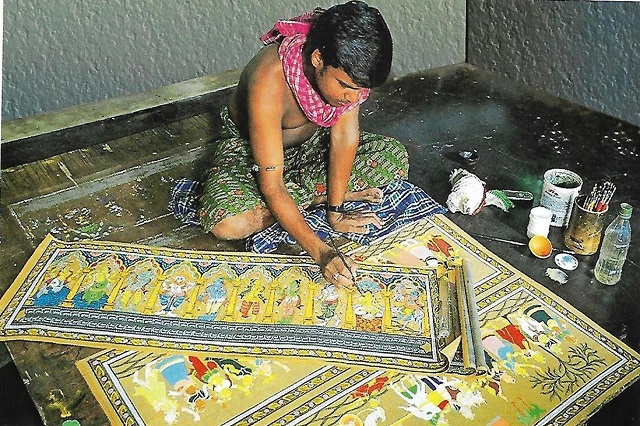
Designing Fabric by hand Painting
Painting on the temple walls forms a part of the glorious tradition.
- “Patta”(cloth)“chitra”(painting) means scroll painting.
- Known for its intricate details as well as mythological narratives and folktales inscribed.
- Done by the skillful painters of Raghurajpur, Puri, Odisha forms an excellent craft.
- Similar painting is done on tassar fabrics and used as saree and dress material.
Designing fabric by hand painting Kalamkari ‘pen-craft’ of Andhra Pradesh
- Exquisite Dye painted textile
- Named after the technique of its making, ‘kalam/qualam’ meaning pen and ‘kari’ meaning art.
- Specially prepared cotton fabric was hand drawn with a special pen using mordants as ink.
- These fabrics were then dyed in natural dyes.
- Used as furnishings such as bedspreads, curtains, tablecloths apart from apparel.
- The fabric is printed with wax resist before being dyed, then wax is removed, and the process is repeated.
Designing fabric by hand Painting
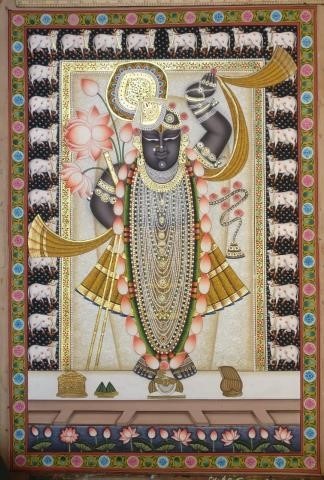
Pichwai of Nathdwara, Udaipur district, Rajasthan
- Pichwai is hand painted
- Depict the story of Shrinathji,the child avatar of Lord Krishna,holding the Govardhan hill.
- Used to embellish the walls of the temples as a backdrop.
- Recognized internationally, Nathdwara has devotees from across the globe.
Designing fabric by Embroidery
Chikan-kari or Chikan hand embroidery on white fabrics
- Design is predominantly floral
- Stitched using untwisted white cotton or silk yarn on the surface of the fabrics
- Series of flowers or geometric designs set against a semi-translucent mesh background,
- Some stitches are worked from the front and others from the back
- There is a fixed repertoire of stitches, several types usually appear on the same piece of embroidery.
- Originated in Bengal and influenced by Jamdani weaving of Dacca and Bengal.